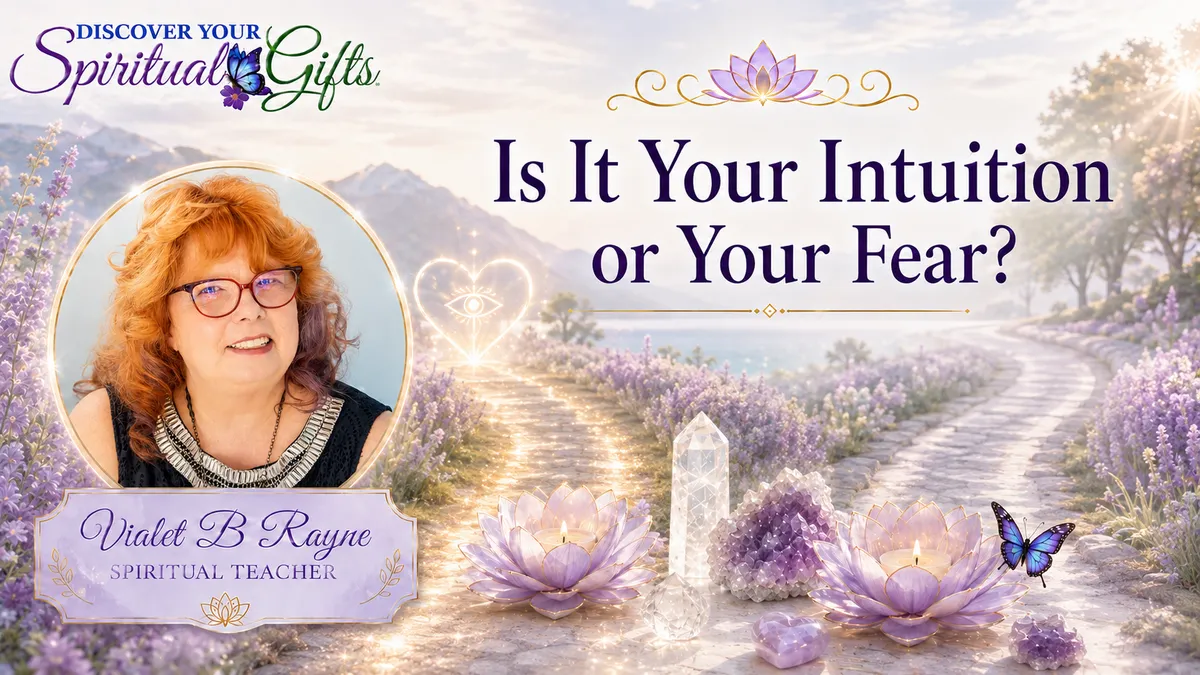
Is It Your Intuition or Your Fear?
Is It Your Intuition or Your Fear?
One of the most common questions people ask when developing their spiritual gifts is, “How do I know whether this is my intuition or my fear?”
Both can appear quickly. Both may create a strong internal response. Both can influence our choices, relationships, and sense of direction. When emotions are heightened, it can be difficult to recognize which voice we are hearing.
Intuition and fear do not always sound dramatically different. Intuition may warn us about a situation, while fear may attempt to protect us from perceived danger. The difference is often found in the quality of the message, the energy surrounding it, and what happens when we become still enough to listen.
Developing intuition is not about eliminating fear. It is about learning to understand the language of your inner guidance while treating your fears with awareness and compassion.
Intuition Is Your Inner Knowing
Intuition is the quiet knowing that arises before the logical mind has gathered all the evidence. It may come through a feeling, thought, image, physical sensation, dream, or sudden awareness.
You may intuitively know that you should call someone, take a different route, accept an opportunity, or pause before making a commitment. You might meet someone and immediately sense ease or discomfort without understanding why.
Intuition is not always dramatic. It often arrives as a subtle impression that could easily be dismissed.
The intuitive message may be as simple as:
Wait.
Ask another question.
This feels right.
Something is missing.
You already know the answer.
Intuition communicates through your natural spiritual and energetic senses. Some individuals receive guidance through clear knowing. Others sense it through their bodies, emotions, inner vision, or inner hearing.
Understanding how your intuition speaks requires reflection. You begin to recognize its voice by noticing how guidance has appeared throughout your life.
Fear Wants to Protect You
Fear is not your enemy. It is part of the mind and body’s protective system. Its purpose is to recognize potential danger and help you respond.
Some fears arise because a situation is genuinely unsafe. Others are connected to past experiences, limiting beliefs, uncertainty, or the discomfort of doing something new.
Fear may become activated when you are preparing to take an important step. You might feel afraid before speaking publicly, setting a boundary, sharing your gifts, beginning a relationship, or making a significant change.
The presence of fear does not always mean you are moving in the wrong direction. Sometimes fear appears because you are moving beyond what is familiar.
The key is to determine what the fear is attempting to protect you from. Is there a genuine risk that requires attention? Is an old wound being activated? Are you afraid of the experience itself, or are you afraid of being seen, judged, rejected, or unsuccessful?
When you listen to fear with compassion, it can provide useful information without being allowed to make every decision.
The Energetic Difference Between Intuition and Fear
Intuition often feels clear, direct, and emotionally neutral. Even when it offers a warning, the message may arrive with a sense of calm certainty.
Fear tends to be louder and more repetitive. It creates multiple scenarios, questions, and imagined outcomes. It may demand an immediate response or convince you that everything will go wrong.
Intuition says:
This is not aligned.
Fear says:
This will become a disaster, and you will never recover.
Intuition says:
You need more information.
Fear says:
You cannot trust anyone or anything.
Intuition says:
This opportunity is important.
Fear says:
What if you fail? What if people judge you? What if you are not ready?
Intuition offers a message. Fear often builds a story around it.
Your intuition may feel firm, but it is rarely cruel. It does not shame, insult, or diminish you. A voice that says you are foolish, unworthy, or incapable is not Divine guidance. It is more likely connected to fear, conditioning, or an old emotional wound.
When Intuition Brings a Warning
There is a common belief that intuition always feels peaceful and positive. However, intuition may communicate that something is wrong, unsafe, or out of alignment.
You may feel an immediate tightening in your body when speaking with someone. You might sense that a decision should be delayed or that you should leave a particular environment. The message may be uncomfortable, but it often remains simple and consistent.
Fear tends to escalate as the mind adds imagined details. Intuition repeats the essential message without needing to frighten you into listening.
If you receive an intuitive warning, you do not need to dismiss it simply because you cannot explain it logically. Pause, gather more information, and take reasonable steps to protect your well-being.
Spiritual awareness should work in partnership with practical judgment. Trusting your intuition does not mean ignoring facts. It means allowing your inner awareness to become part of the decision-making process.
How Past Experiences Can Affect Inner Guidance
Past experiences can shape how we interpret people and situations. If you have experienced betrayal, rejection, abandonment, or instability, your nervous system may respond strongly when something feels similar.
A current experience can activate an old fear even when the circumstances are different.
For example, a delayed message may trigger fears of abandonment. Constructive feedback may feel like rejection. A healthy relationship may feel unfamiliar and therefore unsafe. An exciting opportunity may activate memories of a previous disappointment.
This does not mean your feelings are invalid. It means they deserve reflection before you act on them.
Ask yourself:
Is this response connected to what is happening now?
Does the intensity of my reaction match the present situation?
Have I felt this way in similar circumstances before?
What evidence supports my concern?
What part of me feels threatened or unsafe?
Your intuition and your healing work are not separate. As you heal old wounds, it becomes easier to hear your inner guidance without the interference of unresolved fear.
Urgency Versus Clarity
One of the clearest differences between fear and intuition is urgency.
Fear often tells you that you must make a decision immediately. It may insist that if you do not act now, you will lose the opportunity, disappoint someone, or experience a terrible outcome.
Intuition can sometimes prompt immediate action in an unsafe situation. However, in everyday decisions, genuine guidance usually remains available after you pause.
If possible, give yourself time before making an important choice. Take several breaths, step away from the situation, rest, journal, or return to the decision the following day.
Notice which messages remain consistent.
Fear may change its argument repeatedly. Intuition often continues offering the same clear direction.
Clarity does not always mean you know exactly how everything will unfold. It may simply mean you know the next aligned step.
The Body as an Intuitive Messenger
Your body often recognizes energy before your conscious mind understands it.
Intuitive guidance may appear as expansion or contraction. An aligned choice may create a sense of openness, warmth, relaxation, or increased energy. Something misaligned may bring tightness, heaviness, nausea, tension, or a feeling of pulling away.
However, body sensations must be interpreted carefully. Excitement and anxiety can feel similar. A new opportunity may create both expansion and nervousness. A familiar but unhealthy situation may feel comfortable simply because you recognize it.
Do not rely on one sensation alone. Consider the message within the larger context of your emotions, experiences, and available information.
You might ask:
When I imagine saying yes, what happens in my body?
When I imagine saying no, what changes?
Does this sensation feel like an old protective response or a present warning?
What happens when I breathe and allow the intensity to settle?
The body is an important intuitive tool, but learning its language takes time and practice.
Creating Space to Hear Your Intuition
Intuition is always present, but it can be difficult to hear when your mind is filled with noise.
Constant activity, outside opinions, social media, stress, and emotional overwhelm can pull your attention away from your inner knowing. If you immediately ask everyone else what you should do, their fears and preferences may become louder than your truth.
Create regular moments of stillness. You might meditate, journal, spend time in nature, sit with a candle, or simply breathe without trying to solve anything.
Ask one clear question and then listen.
Avoid asking the same question repeatedly because you dislike the answer. Repeatedly pulling cards, seeking additional readings, or requesting opinions from many people can create more confusion.
At some point, intuitive development requires trusting what you have already received.
A Reflection Practice for Discernment
Bring to mind a decision or situation in which you are unsure whether you are receiving intuition or fear. Write the question at the top of a journal page.
Divide the page into two sections: The Voice of Fear and The Voice of Intuition.
Under the first section, allow your fear to speak honestly. What is it worried about? What does it believe could happen? What is it attempting to protect?
Thank the fearful part of yourself for trying to keep you safe. You do not need to shame or silence it.
Under the second section, take several slow breaths and ask, “What does my soul know about this situation?”
Write the first simple response that arises. Do not force an answer or turn it into a long explanation.
Then reflect on these questions:
Which voice feels repetitive or demanding?
Which message feels simple and consistent?
Is there factual information I still need?
What choice honors both my inner guidance and my well-being?
If I trusted myself, what would my next step be?
Close your practice with the affirmation:
I honor my emotions without allowing fear to control my choices. I create space for clarity, and I trust the quiet wisdom of my soul.
Trust Is Built Through Experience
Learning to trust your intuition is a relationship that develops over time.
Begin with small decisions. Notice when you feel guided to take a particular route, contact someone, choose a book, attend an event, or spend time in quiet reflection. Record the guidance you receive and what happens when you follow it.
A spiritual journal can help you recognize patterns. You may discover that your intuition communicates through the same physical sensation, phrase, symbol, or type of knowing.
You will not interpret every message perfectly. Intuitive development includes practice, discernment, and occasional misunderstanding. The goal is not perfection. It is a deeper and more honest relationship with yourself.
Each time you pause, listen, and honor your inner guidance, trust becomes stronger.
Fear may still speak. It may raise questions or remind you of past pain. You can acknowledge its presence without handing it authority over your life.
Your intuition will not ask you to abandon yourself. It will guide you toward greater truth, alignment, awareness, and wholeness.
Become still.
Listen beneath the noise.
The voice of your soul is already speaking.